How Claire Used AI to Build a Real Business at 16, Earning Over $4,000
A high schooler created a keychain you tap with your phone to get a daily Bible verse, then built it into a profitable business in her first six months.
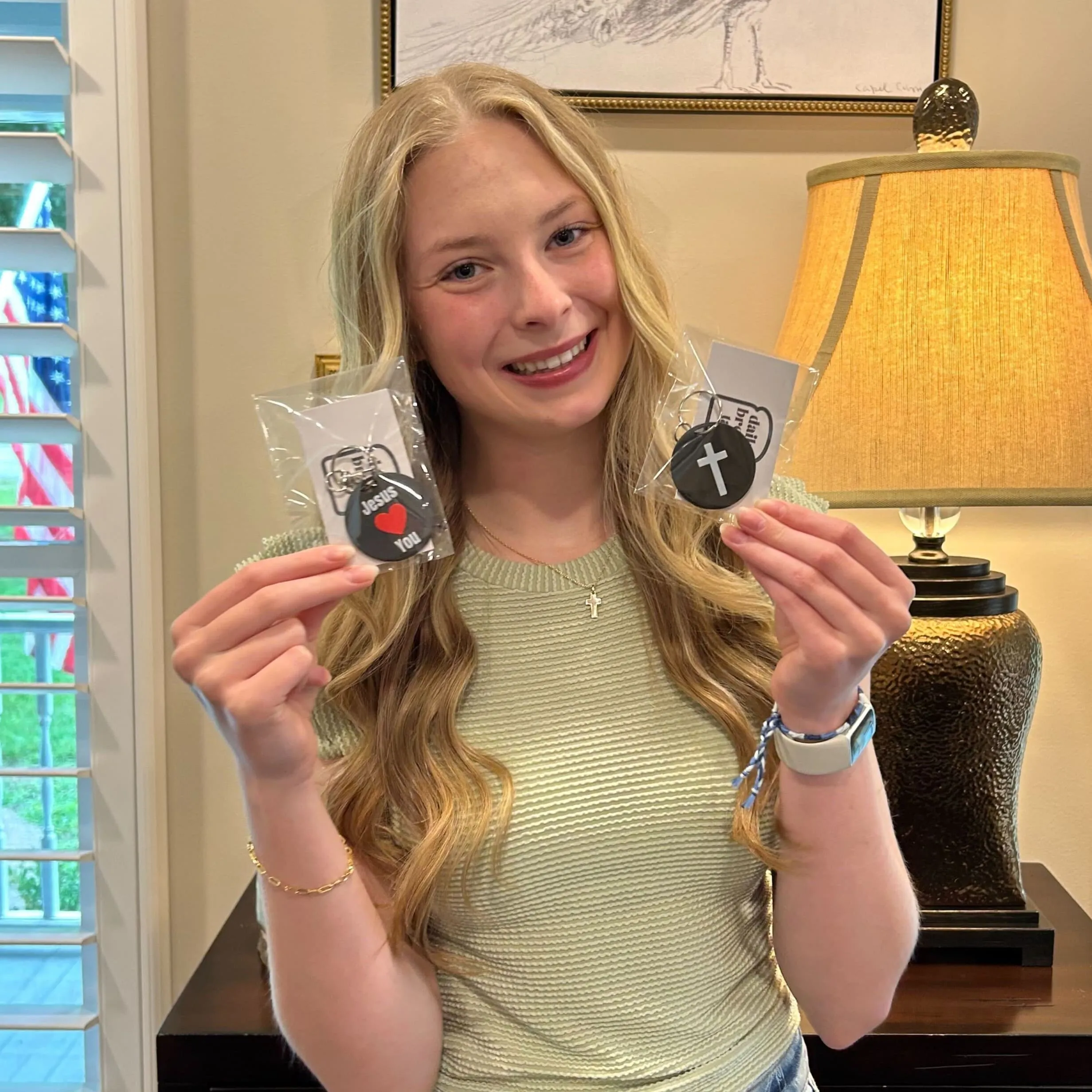
Most high schoolers take a business class, learn some theory, and never sell a thing. Claire did the opposite. As a junior, she built a real product, found customers, and crossed over $4,000 in revenue in her first six months, all while still in school. Here's how she did it.
Where she started
Claire had picked up some business theory in school, but she had never actually started anything. She didn't know how to go from a vague interest to a real product people would buy. That changed at Go Superlative, where the focus wasn't on definitions but on building: taking an idea and turning it into something real.
The idea
Working with her Go Superlative mentor, Borja, Claire landed on a problem she understood well: plenty of Christians want to read their Bible more, but they're busy and always on the go. Her solution was a keychain with a twist. You tap it with your phone and it pulls up a new Bible verse, a small physical nudge toward a daily habit. She named the business Daily Bread Tap.
What she built
Claire built the whole thing using AI and the tools she learned in her Go Superlative sessions, from designing the product to setting up the store. The keychains sell for $15.99, with limited holiday editions at $16.50. She sells direct through her website, dailybreadtap.com, stocks them in a growing number of shops, and gets a steady stream of word-of-mouth and Instagram sales on top.
What Go Superlative taught her
School gave Claire some theory, but it was building her own project at Go Superlative that taught her how business actually works. Pricing, production, finding customers, fulfilling orders: she learned all of it by doing, not from a textbook. The biggest shift was learning how to start, how to turn an idea into a real solution to a real problem that people will pay to solve.
The results
In her first six months, Claire crossed $4,000 in revenue, all as a full-time student. Her customers are mostly Christians buying for themselves and, increasingly, as graduation and holiday gifts. The product tends to sell itself once people see it in person: tap, and a verse appears.
What's next
Claire isn't thinking small. Her near-term plan is to grow through churches, faith-based conferences, and partnerships with Christian creators, plus adding capacity so she can handle far more orders. Her three-year target is $80,000 a year, and her bigger dream is to sell a thousand keychains a month. She knows her age and her story are an advantage, and that the window to use them is exactly why she's moving now.
You could be the next story here.
Go Superlative is where ambitious teens turn an idea — or just the ambition to start — into something real, with founder mentorship the whole way.
Apply for the next cohort →